
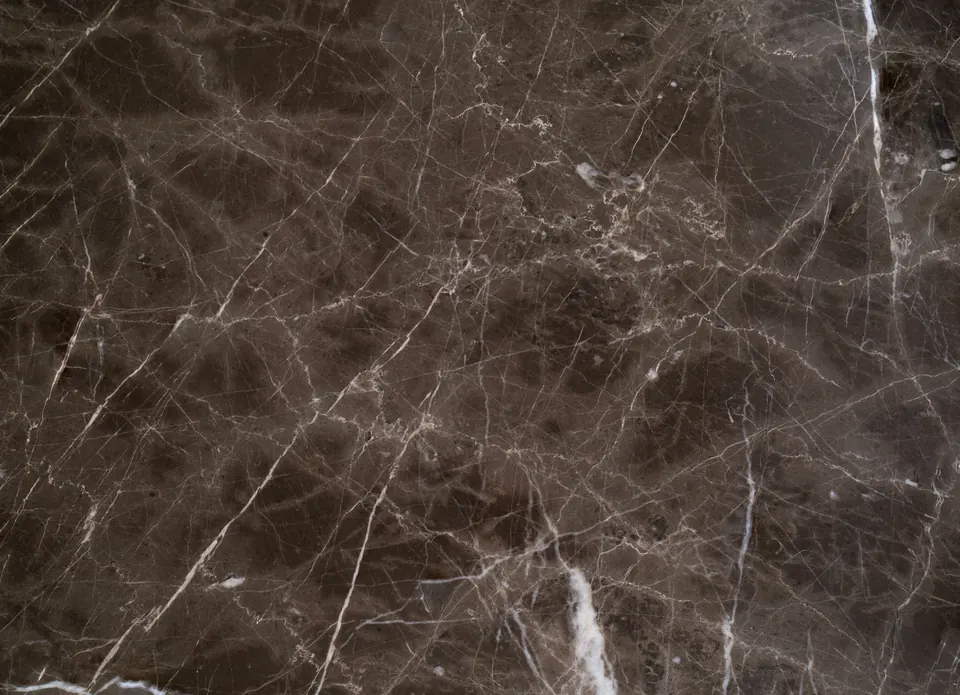

Marble floor restoration
A dull or scratched marble floor is ground with diamonds then polished on site, without lifting the tiles. In a busy hallway we finish with crystallisation, which hardens the surface.
What we fix
The grey haze along walkways comes from grit under shoes, and polishing alone clears it. Dull rings near the kitchen are acid etching, removed by light grinding at 200 or 400 grit. Lipped tiles need coarser grinding, from 50 grit. On black or dark green marble every swirl mark shows, so the last passes take longer.
On site
We work wet with a rotary machine in an empty room, vacuuming the slurry. Chipped tile edges are filled with epoxy tinted to the stone. Fluorosilicate crystallisation is only done on marble, travertine or limestone. A tile that sounds hollow is re-bonded before any polishing.
Afterwards, wash with a pH neutral soap: vinegar or a limescale remover will etch the new polish. See also marble restoration and polishing, or ask for a quote.
How it works
- Test on a hidden area
- Hollow tiles re-bonded
- Wet diamond grinding
- Chips filled with tinted epoxy
- Polishing or crystallisation
Frequently asked questions
Another question? Call the workshop: 07 45 20 76 39
Can a marble floor be restored without replacing it?
Yes, as long as the tiles are well bonded and thick enough to grind.
Does the room need to be empty?
Yes, the grinding is wet and the room must stay clear until it dries.
Is terrazzo restored the same way?
Yes, terrazzo made with marble chips is ground and polished with diamonds in the same way.
Related services
Free quote
Send your measurements or a photo of the room and we will call you back. The quote costs nothing.